Wellbeing

A Prayer for Wellbeing

Loving God, source of all life and healing, we offer ourselves to you—our tired bodies, our anxious minds, our hopeful spirits. Guide us on the path of wholeness. Help us to receive your grace in moments of stillness, to extend compassion to ourselves and our neighbors, and to work tirelessly for a world where all can flourish. Amen.

Wellbeing Initiative at St. Andrew

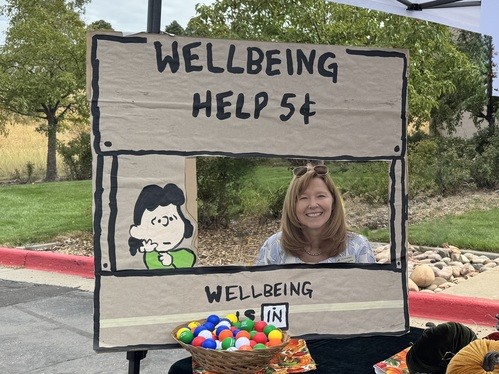
The Wellbeing initiative at St. Andrew focuses on intentionally addressing the physical, mental, emotional, social and spiritual needs of individuals to foster a thriving community.

At the heart of our faith is a God who desires abundant life for all creation (John 10:10). We understand this “abundant life” not as a static state of perfection, but as a dynamic, holistic journey toward wholeness—what we call wellbeing. At St. Andrew, wellbeing is the integrated flourishing of body, mind, spirit, and community, nurtured by God’s grace and directed toward love of neighbor and care for the world.

Key values:
• Everything is Connected: Our personal wellbeing is inextricably linked to the wellbeing of our community and the planet. We are part of the same sacred whole.
• Growth is a Process: We are always in a process of becoming. Setbacks, grief, and struggle are not signs of failure but part of the human journey, where God meets us with particular tenderness.
• We Co-Create with God: God invites us to be active partners in the healing of the world, contributing to the wholeness of our community and our neighbors.

Resources:
• The General Board of Church and Society (GBCS) – Health & Wholeness – Advocacy resources linking faith, justice, and public health
The Book of Resolutions of The United Methodist Church (2020/2024): Contains official stances on mental health and advocacy.
• The 988 Suicide & Crisis Lifeline – Call or text 988 for free, confidential support, 24/7


The Listening Bench

Sunday, June 28 | 10:45 am – 1 pm
Sunday, July 5 | No Listening Bench
New time Starting Sunday, July 12 | 10:15 am – 12:45 pm

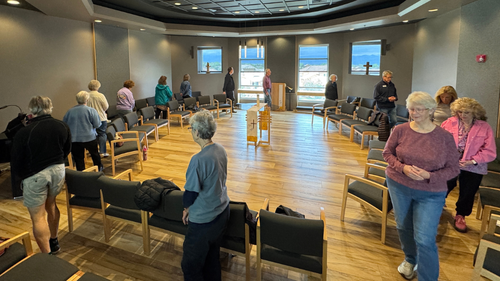
The Listening Bench offers a safe space where you can share what’s on your mind with a trained volunteer listener. This is not counseling or therapy—it’s more like talking with a caring friend who is lending an ear. This new program is offered by our Wellbeing ministry and is open to any adult, whether you’re part of St. Andrew or someone in the wider community. Stop by the Prayer Room near the west gathering space on the main level of St. Andrew on Sundays.
Allison Mangus and Allison Bell discuss the launch of the Listening Bench as part of our Wellbeing Initiative

July Wellbeing Focus

Cheer Up the Lonely Day

July 11 has been designated National Cheer Up the Lonely Day to encourage us to take time out of our busy schedules to contact someone who might be experiencing loneliness or feel neglected.

Over 40% of people will experience loneliness at least once in their life. NY Department of Health reports “Social isolation and loneliness is associated with multiple physical and mental health issues, including cognitive decline, anxiety, depression, cardiovascular disorders, weakened immunity, Alzheimer’s disease and premature death.”

Here are a few easy ways to help eradicate loneliness:
1. Invite someone to share a cup of coffee or meal together.
2. Send someone a note via email or snail mail.
3. Compose an uplifting playlist to share with others.
4. Drop off a gift or flower to a neighbor.
5. Volunteer at a nursing home, hospital or local school.
6. Visit a retirement community to share a musical talent or play a board game.
7. Ask someone to join you for a walk.
8. Start a social group (book club, yoga club, walking club) that encourages monthly participation.

Some people isolate due to health issues, financial problems or grief due to a loss. One small act of kindness can make a big difference!

International Self Care Day

This day is celebrated annually on July 24 to highlight the benefits of proactive personal wellness and the importance of integrating self care into your daily routine. Self care encompasses your physical, mental and emotional needs. It is important to understand that self care is very personalized and different for each person.

Here is a list of suggestions that may work for some:
1. Compose a personalized list of all the ways that feel like self care to you and try to integrate them into your daily living.
2. Listen to music.
3. Find ways to help you stress less by meditating, getting a massage, or spending time outdoors.
4. Do some reflective journaling.
5. Read your favorite book.
6. Perform regular exercise, yoga or stretching.
7. Take just 5 minutes out of your day for yourself.
8. Prioritize your physical wellbeing by scheduling an annual checkup with your physician.

Integrating self care into your daily routine helps you perform at your best, maintain positive self esteem and self confidence and gives you energy for the day.

Ongoing Wellness Opportunities

Meditation and Silent Prayer Group

Wednesdays | 12–1 pm

Bill Hamaker, a member of St. Andrew, is an assistant teacher at the Zen Center of Denver and longtime practitioner of Zen meditation. Bill will offer instruction in the areas of mindfulness, meditation and compassionate action along with an opportunity to share with one another the aspects of our mutual spiritual practice. No reservation required.

Labyrinth

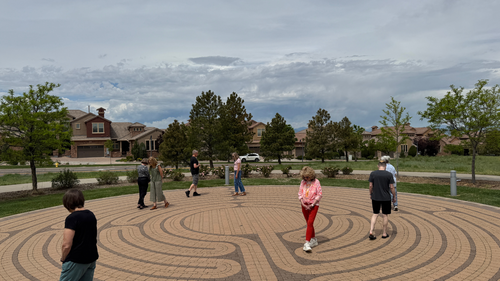
Always available on the southwest end of the church grounds

The labyrinth at St. Andrew offers a contemplative space for prayer, meditation, and spiritual reflection. Unlike a maze with dead ends and confusion, our labyrinth provides a path that leads to the center and back out again—a metaphor for life's journey and our relationship with the divine.

8 Dimensions of Wellness

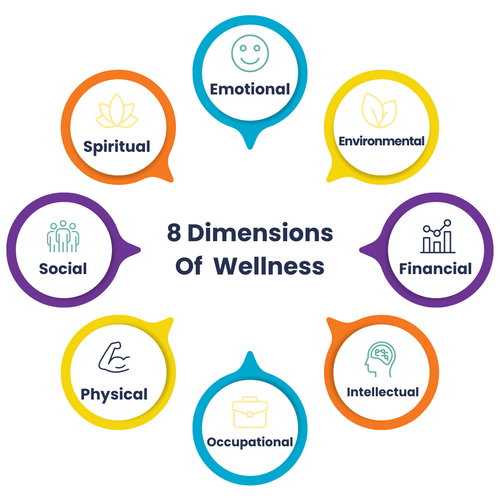
Learning about the 8 Dimensions of Wellness can help you choose how to make wellness a part of your everyday life. Wellness strategies are practical ways to start developing healthy habits that can have a positive impact on your physical and mental health. Here are the 8 Dimensions of Wellness:
  1. Emotional – Coping effectively with life and creating satisfying relationships
  2. Environmental – Good health by occupying pleasant, stimulating environments that support well-being
  3. Financial – Satisfaction with current and future financial situations
  4. Intellectual – Recognizing creative abilities and finding ways to expand knowledge and skills
  5. Occupational – Personal satisfaction and enrichment from one’s work
  6. Physical – Recognizing the need for physical activity, healthy foods, and sleep
  7. Social – Developing a sense of connection, belonging, and a well-developed support system
  8. Spiritual – Expanding a sense of purpose and meaning in life
 
Source: SAMHSA.gov